
By Ben Clark, Founder of Adapt to Perform
When most people hear the word “cardio,” they picture treadmills, runners pounding the pavement, and high-energy spin classes. For us wheelchair users, these options are often difficult or impossible, but that doesn’t mean cardio is out of reach. Focusing on cardiovascular fitness can boost your energy, improve long-term health, and make everyday activities easier, from pushing around town to transferring with greater confidence and ease.
Wheelchair fitness has been my passion ever since my spinal cord injury in 2010. Over the years, I’ve experimented with virtually every form of cardio for wheelchair users. From my early swimming days to mastering the SkiErg, from creating workouts to do at home joining adaptive sports; you name it, I’ve tried it. What I’ve learned is this: cardio can fit into any lifestyle. You just need the right approach and the right tools.
So let’s break down three main categories of wheelchair cardio and how each can easily slot into your daily or weekly routine.
No/Low-Equipment Cardio
This is the place most people should start, and for good reason: it’s simple, accessible, and requires little or no equipment and a willingness to move. These workouts are also incredibly flexible, making them perfect for busy schedules.
No-Equipment Cardio
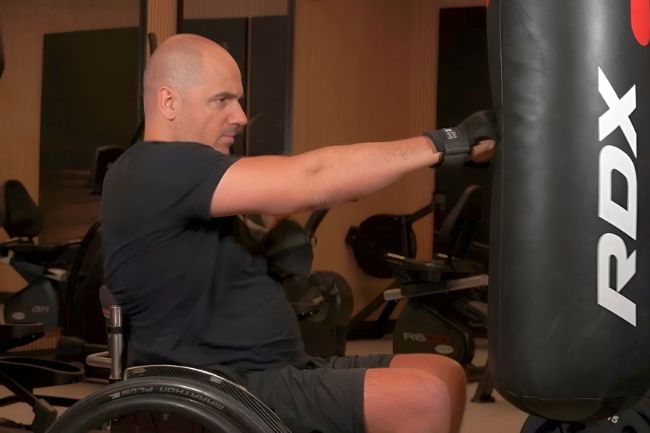
No-equipment cardio is incredibly versatile and surprisingly effective for wheelchair users. Using movements like shadow boxing, adaptive burpees, sit skis, and other dynamic upper-body exercises, you can get a full cardio session without any machines or fancy equipment. These movements might seem simple, but when performed with intention, they have a huge impact on your heart rate, stamina, and overall fitness.
Shadow boxing, for example, is one of the most adaptable options. You can tailor everything, the speed, the power, the angles, and the combinations to suit your ability and energy level. Start with basic punches, then gradually increase intensity. Adaptive burpees and sit skis add variety and challenge, engaging your arms, shoulders, and core while keeping your heart rate elevated. Even just a few minutes of continuous movement with these exercises can build coordination, mobility, and upper-body endurance, making them a powerful tool in any wheelchair fitness routine.
Pole Cardio
This is a great option in wheelchair fitness. Using a simple pole, a broom handle, PVC pipe, stick, whatever you’ve got, you can create endless movement patterns. Rotations, presses, sweeps, rows, pushes. It’s rhythmic, fluid, and great for engaging your core.
It’s particularly handy for wheelchair users with limited grip or trunk control, as the pole can help guide movement in a stable arc. Straps or wraps can help make it even more accessible.
Why These Workouts Fit Easily Into Your Life
No-equipment cardio is so effective because you can fit it in almost anywhere, at home, on your lunch break, while waiting for dinner to cook, or as a quick boost before heading out the door. Even just ten minutes is enough to get your heart rate up and build cardiovascular fitness, and over time, consistency always beats perfection. If you want some examples, then head over to Adapt to Perform on YouTube.
Machine-Based Cardio
Going to the gym and using the cardio machines is a fantastic choice for anyone who enjoys a reliable, heart-pumping workout. And the great news is that it’s no longer just treadmills; there are plenty of options and even some for us wheelchair users.
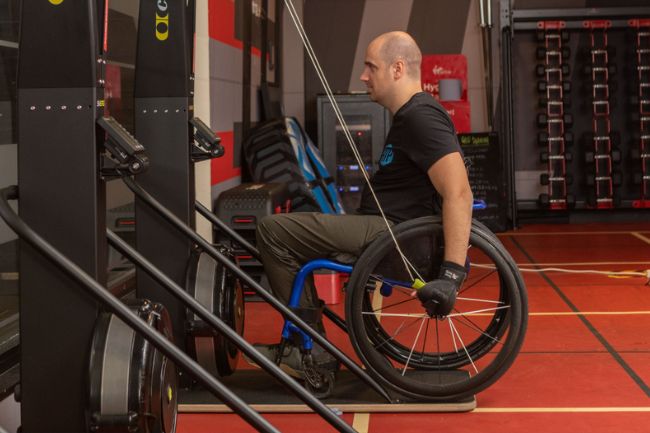
My personal favourite is the SkiErg, an incredibly accessible machine for wheelchair users, thanks to its smooth, natural movement that works for a wide range of mobility levels. It allows you to train endurance, power, speed, and technique, and its built-in metrics, such as calories, distance, pace, and splits, make it easy to track improvements and stay motivated. Upper-body ergometers and similar arm-crank machines offer another excellent way to build cardiovascular fitness while strengthening the pushing muscles we rely on every day.
If you find yourself in a gym, they may have one of these machines available, giving you a consistent, controlled environment to train in. Whether you’re looking for short 10–15 minute bursts, longer endurance sessions, or structured interval training, machine-based cardio makes it easy to tailor your workout and see your progress build over time.
Sports-Based Cardio
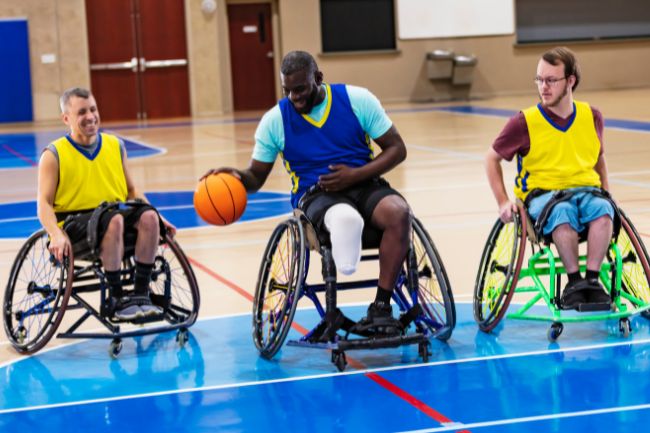
Adaptive sports offer wheelchair users a fun, social, and highly effective way to get cardio. Swimming, which I loved before my injury, is incredibly inclusive; the water supports your body, reduces joint pressure, and allows you to move freely at your own pace, whether for a calm, meditative session or an intense workout. On land, sports like wheelchair tennis, rugby, and basketball add agility, speed, power, and coordination to your routine, while the fast-paced, interval-style play keeps your heart rate up. Beyond the physical benefits, sports bring community, competition, and motivation, making cardio feel less like a chore and more like a lifestyle. Even starting with one session a week or playing casually with a friend can make a real difference in your fitness and enjoyment. To find your local club, check the Wheelpower website and get started.
HIIT vs LISS: Two Ways to Structure Your Cardio
No matter which type of cardio you prefer, whether it’s shadow boxing at home, training for your sport, or powering through intervals on the SkiErg, most workouts fall into one of two simple structures: HIIT or LISS. Understanding the difference between them helps you tailor each session to your energy levels, goals, and daily schedule.
HIIT, or High Intensity Interval Training, involves short bursts of high effort followed by brief periods of rest. For example, you might work hard for 30 seconds, rest for 30, and repeat that pattern for ten to twenty minutes. It is incredibly time-efficient, great for building power and speed, burns a lot of energy in a short window, and keeps your workouts exciting and varied. It is the perfect choice when you are low on time but still want a high-impact session.
LISS, which stands for Low Intensity Steady State, takes the opposite approach. Instead of intervals, you move at a steady, comfortable pace for a longer duration, anything from fifteen to forty minutes of continuous shadow boxing, swimming, or indoor handcycling. LISS is ideal for building long-term endurance, supporting fat metabolism, and putting less stress on the body. It is also easy to maintain while watching TV or listening to music, making it a calm and almost meditative option when you want to move without intensity.
Both HIIT and LISS have real value, both fit naturally into wheelchair fitness, and mixing them throughout the week gives you the flexibility to match your training to how you feel each day. I always prefer doing HIIT training because its fast pace and constant changes keep the workout exciting and challenging. I love mixing up the intervals and pushing my limits in a way that feels rewarding even though it’s harder than steady-state sessions.
How to Fit Cardio Into Your Lifestyle
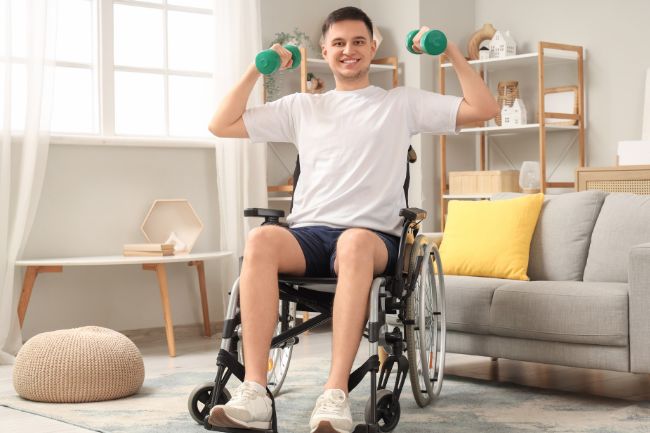
You don’t need big chunks of time or a fancy gym to improve your cardiovascular fitness. What matters most is consistency. Even short, focused sessions can make a real difference. Five to ten minutes here and there is enough, whether it’s a quick boxing session before breakfast or a few rounds on the SkiErg between meetings. Another useful strategy is habit stacking, which means combining your cardio with something you already do. You could box during your favourite song, do pole cardio while the kettle is boiling, or fit in a ten-minute push before your evening routine. Making cardio part of everyday habits helps keep it sustainable and effortless.
You can also mix and match different types of workouts throughout the week to keep things balanced and engaging. For example, one no-equipment session, one sport session, and one machine-based session can form a simple, effective weekly routine. The most important thing is to start at your level. You don’t need to go full throttle right away. Start small, start gentle, and build gradually. The goal is consistency, not intensity, and over time, those small steps add up to big improvements.
Final Thoughts
Cardio for wheelchair users isn’t about fitting into someone else’s version of fitness; it’s about finding what works for you. Whether you’re gliding through the water, sweating on a SkiErg, or shadow-boxing to your favourite tracks, the key is to keep moving in a way that feels good, empowering, and sustainable. Your heart is a muscle. Your lungs can grow stronger. Your energy can increase. And the confidence you gain from consistent cardio spills into every part of your life.
So pick your style, choose your pace and get rolling. You’ve got this.
About the Author
Ben Clark is the founder of Adapt to Perform, the world’s leading adaptive fitness platform for wheelchair users. After sustaining a spinal cord injury in a diving accident, Ben transformed his passion for fitness into a global movement dedicated to helping others unlock their potential through adaptive training, positivity, and community.
Find him online at adapttoperform.co.uk or on YouTube at Adapt to Perform.


