
For many elderly wheelchair users, using their feet to assist with propulsion can be highly effective. Those with a history of walking often find it more natural, especially if their arms are weak or arthritic. Foot propulsions occur when the heel contacts the ground and the toe lifts off. By keeping the feet flat on the ground, users can maximise this heel-toe motion, improving mobility and independence.
The term rolling resistance refers to the energy required to keep the wheelchair moving at a steady pace and its ability to overcome obstacles that hinder forward movement. Obstacles can include floors, carpet, pavements, streets and gravel. Other factors to keep in mind include the user’s weight, the weight of the wheelchairs frame, the type of casters and wheels and how weight is distributed.
The wheelchair can be configured and with the help of optimal seating it can accommodate foot propulsion while reducing the effort required to start or maintain movement. An incorrect set up can lead to secondary problems, especially after prolonged use.

Top Tips
Seat Height
When considering the frame seat height be sure to account for the height of the cushion, as this could affect your options. You need to ensure that both feet can reach the ground to allow for foot propulsion. Adjustments should be made based on each unique users’ requirements.
Slope and Tilt
Lowering the hips below the knees can assist in efficient foot propulsions and help reduce the user’s risk of sliding forward. This must be assessed carefully to ensure the rider can sit comfortably with a sloped seat.
Centre of Gravity
The optimal position of the rear wheel is important if you are using your upper body to manoeuvre the wheelchair. Rolling resistance can be reduced by positioning the rear wheel as far forward as possible, as this shifts the centre of gravity towards the front of the chair.
Pelvic Belt
The strapping angle is critical for correct pelvic positioning. When placed at the correct angle, the pelvic belt can stabilise the pelvis while allowing movement for propulsion.
Size and Type of tyres
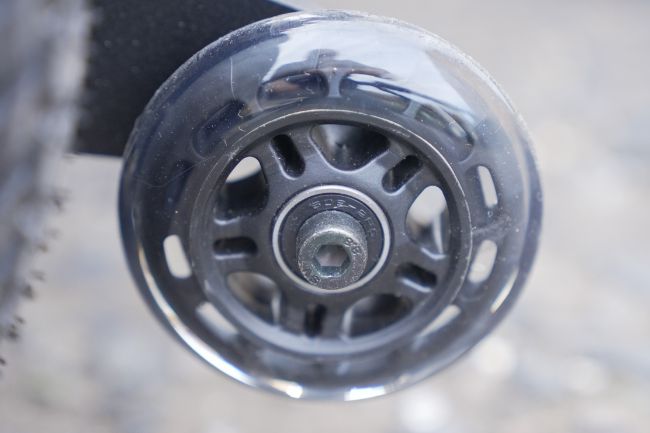
Smaller castors make manoeuvring easier on smooth flooring surfaces and are ideal for users relying on lower limb propulsion. Wider or larger castor wheels are better suited for outdoor use and travelling over thresholds.
Please note – This method of propulsion must be properly assessed as safe for the user who must have good range of movement in their lower limbs and is low risk for pressure sores. The chair must be properly configured, and this method should not be used on a manual wheelchair which has been prescribed with footrests. Particular attention should be drawn towards avoiding high speed or slopes which may cause injury to ankles.
Call the number at the top of this page to speak to our expert advisors about foot propulsions using a wheelchair and the options available.


