
Cerebral palsy is an ‘umbrella term’ that describes a group of conditions affecting the developing infant or child’s brain. It is the most common physical disability in childhood. Cerebral palsy results from damage to the brain that occurs during pregnancy; around the time of birth; or within the first two years after birth.
How cerebral palsy affects a person will vary depending on the extent and location (in the brain) of the damage and the age when the damage occurs. It is a lifelong condition, the main difficulty affecting a person’s ability to control their movement, posture and balance.
As well as affecting movement, CP can affect other areas of function such as communication, eating and drinking, learning ability, vision, hearing and perception (difficulties in interpreting and understanding sensory information from the environment).
In some people, all of these functions are affected, but others may have difficulties in only one of these areas. Cerebral palsy can make ordinary activities that most of us take for granted, difficult. This can include walking, talking, dressing and fine motor skills such as writing, using a knife and fork, and doing up buttons. Every person with CP is unique i.e. no two people will be affected by CP in the same way – as this depends on the type of CP a person has and how much their body is affected.
While the original damage to the brain does not get worse over time, as a person with CP grows, they can develop secondary problems with their muscles and joints. People with CP may think their condition is getting worse if their mobility is deteriorating, but early aging of their body is often the cause due to premature deterioration and de-conditioning of the musculoskeletal system compared to people without CP.
Mobility is a constant challenge for adults with CP and impacts on quality of life, physical abilities and active participation in daily life with increasing age.
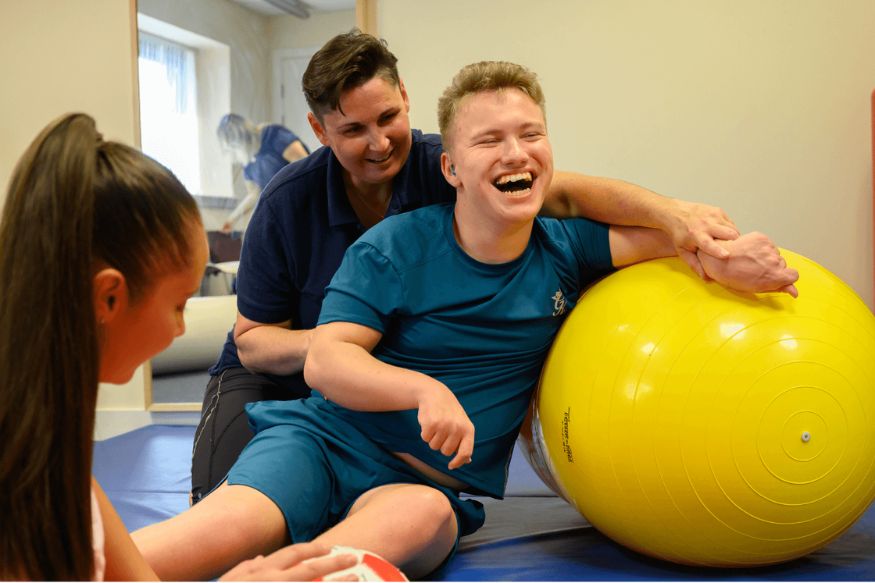
What are the different classifications of CP?
Spastic (most common form)
- Muscles can be stiff and tight (especially when trying to move them quickly) and be increased with effort and emotion
- Difficult to move and reducing the amount of movement
- Movement is often in predictable patterns
Dyskinetic
- Characterised by involuntary movement
- Muscles switch between stiffness and floppiness, causing uncontrolled body movements or spasms.
Further sub-types;
- Dystonic
– Fluctuations in tone can be very large
– Can get stuck in a posture and appear stiff - Choreoathetotic
– Fluctuations in tone are less, still involuntary movements
– Can get in the way of planned activities
Spastic and Dyskinetic motor types can affect:
- Both sides of the body = bilateral
- One side of the body = unilateral.
Ataxic cerebral palsy
- shaky, less coordinated movements
- affects balance, fine motor control and automatic movement and adjustments to posture.
Mixed
- May occur if more than one area of a brain is damaged
- May show a combination of the above motor difficulties

What are the different levels of motor function?
Gross Motor Function Classification System (GMFCS) is a system of classifying the severity of cerebral palsy and helps to describe a person’s limitations and abilities in terms of mobility. It provides adults with cerebral palsy, families, and clinicians with a clear description of someone’s current motor function, and an idea of what equipment or mobility aids an adult may need in the future. It describes five levels of mobility.
GMFCS I: Can walk with no limitations indoors and outdoors – but run/jump with small limitations
GMFCS II: a person can walk but with some limitations e.g. requires a railing, handheld mobility device, or assistance while climbing stairs, walking long distances, or walking on uneven surfaces.
GMFCS III: Can walk but needs to use a mobility device for daily activities (or needs a manual wheelchair for long distances.
Mobility devices
• walking frames are solid and come with four legs that have to be lifted in order to move forward. offer extra support when it comes to balance and stability
• rollators are lightweight and come with four or three wheels that can be pushed.
GMFCS IV: Typically uses wheeled mobility in most environments and may use body support walkers to mobilise in some environments.
GMFCS V: The person is completely dependent on assistance in daily activities. Some might achieve self-mobility using a powered wheelchair with extensive adaptations.
Cerebral Palsy Scotland is a charity that improves the lives of children and adults with cerebral palsy through specialist therapy, support and information. To find out more visit Cerebral Palsy Scotland
Lesley Nutton, Physiotherapist, Cerebral Palsy Scotland
If you are looking for mobility products to support with Cerebral Palsy get in touch with our team who will be able to arrange a Free Home Demonstration.
or 0141 336 1796


