
After a long day, a good night’s sleep is essential for both a user’s mental and physical health. There are many different variations of beds, each one making a difference in sleep quality, comfort and support, that’s why picking the correct bed is essential for those with mobility issues. In this guide we will focus on various types of beds to help you select the best one.
Before selecting a bed, it is important to think about a user’s needs and factors such as mobility level, medical conditions and mobility equipment. Ask yourself questions such as: Will the user require assistance getting in and out of bed? Are they in bed for extended periods of time? Do they need additional safety measures? When considering all these points you will be able to determine which of the following bed types will best suit.
Types of Beds
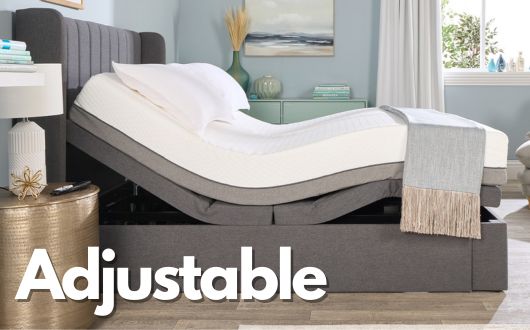
Adjustable Beds
Adjustable beds are a fantastic choice for users with mobility challenges and for easing everyday aches. The user can maintain their independence through easy-to-use controls which adjust the back and leg rests, allowing for customised positions. This makes it easier to find a comfortable sleeping position or a position that provides optimal postural support.
The adjustability of these beds brings many health and orthopaedic benefits to the user. Such benefits include:
- Pressure relief
- Easy transferring
- Improved circulation
- Reduced back and joint pain
- Reduced swelling
- Improved breathing
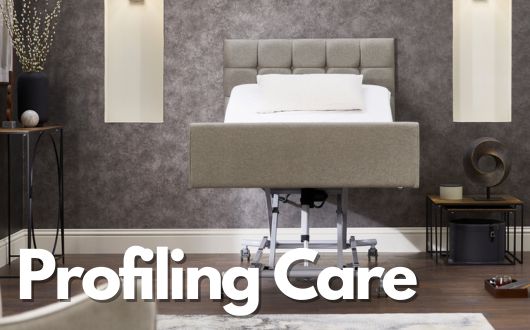
Profiling Care
Often found both in care homes and private homes, these beds are designed to meet a user’s unique needs and aid caregivers. Profiling care beds are like adjustable beds in that you can adjust the back and leg rest however, these beds also have the added benefit to adjust the bed height. This feature allows for easier access and enhanced safety for the user. Another difference is the option to add side rails which provide additional safety.
The benefits to the user are the same as those outlined in adjustable beds, therefore, let us dive into the benefits for the carer. The height adjustability allows the carer to place the bed at level that is comfortable for them rather than bending over or overexerting themselves to provide daily care. Additional benefits include:
- Easier to clean
- Reduced back pain and strain
- Transfer the user in and out with ease
- Easier to reposition the user
- Adjust the user for administering medication or personal care
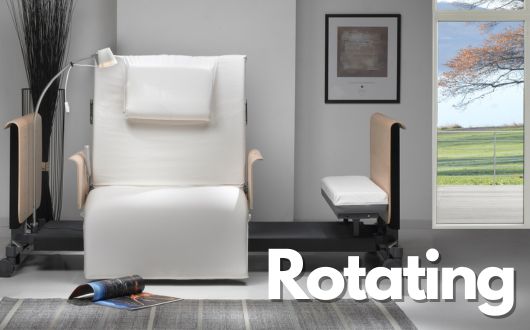
Rotating
These beds are extremely unique in design and can be labelled as the perfect choice for transfers. They transform from a bed to an upright chair in one smooth movement, allowing the user to enter and exit confidently, safely and independently. Additionally, side rails can be selected as an extra safety measure. This should mean only one person is required to assist the user out of bed rather than two.
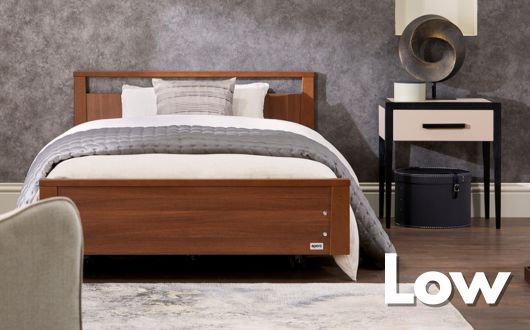
Low Beds
Also known as floor beds, this bed type is designed to be positioned close to the ground. This is to provide more security for users who may be more prone to falling or sliding, reducing any fall impact and the risk of severe injuries. They are also a significant help to getting legs lifted onto the mattress and a great space saver, allowing more room for any medical devices or mobility aids.
Bariatric
Designed for users with a higher body weight, these beds feature a wider frame and a more spacious sleeping platform. Those who weigh greater than 32 stone are recommended to have a bariatric bed. These beds are more reinforced than a standard bed to handle the additional weight and are built from sturdier materials, ensuring safety and stability for the user.
This bed type features easy-to-clean surfaces, leg and backrest inclines to assist with weight distribution and provides a more comfortable environment for sleeping.
What About Mattresses?
In conjunction with selecting a bed, it is just as important to think about the mattress. Some users may require a firmer surface for their needs whereas others may require one which is softer. The mattress should provide the user with optimal comfort, support and pressure relief.


